
Modern vehicles come with smart safety features designed to help reduce accident risk. These systems rely on cameras, sensors, and radar to function accurately. After a collision, even minor structural repairs can shift these components out of alignment. Without proper recalibration, safety systems may deliver incorrect warnings or fail to respond when needed.
At Southwest Collision, ADAS calibration is part of the collision repair process in Ardmore, OK. This step restores correct sensor positioning, so driver-assist and safety features operate as designed. Recalibration is a required step after many repairs to ensure safety systems operate as designed.
After repairs, vehicles often look restored on the outside, but internal systems may still be misaligned. Sensors behind bumpers, cameras near windshields, and radar units in grilles are highly sensitive to movement. Even slight shifts in mounting points or panel positioning can disrupt data accuracy. This can affect automatic braking, lane alerts, and collision warnings. Proper ADAS calibration verifies alignment, confirms system communication, and restores reliable performance, helping maintain safe driving conditions and dependable vehicle response in real-world traffic situations.

Key Takeaways
- ADAS calibration is required after most collision repairs to keep cameras, sensors, and safety systems functioning correctly and responding as designed. Even minor repairs can affect system accuracy.
- Both static and dynamic calibration methods are used, and some vehicles require both to restore full system functionality. The correct method depends on the vehicle make, model, and repair type.
- Skipping calibration puts safety, insurance coverage, and warranties at risk. Uncalibrated systems can fail to detect hazards properly, and missing documentation may lead to denied claims or voided coverage.
- Only shops with proper equipment and training should perform ADAS calibration work. Specialized tools, software, and procedures are required for accurate results.
- OEM parts and manufacturer procedures are necessary for reliable calibration outcomes. Following factory standards supports proper system performance and long-term vehicle safety.
What Is ADAS and Why Does It Matter?
ADAS stands for Advanced Driver Assistance Systems. These are safety features in newer vehicles that help you drive more safely. They include lane departure warnings, automatic braking, blind spot detection, and adaptive cruise control.
According to the Insurance Institute for Highway Safety, front crash prevention systems reduce rear-end crashes by 50% when they include automatic braking. These systems have been shown to significantly reduce certain types of collisions.
Your vehicle relies on cameras, radar sensors, and other technology to make ADAS work. During collision repair, these components can move out of position. A sensor that’s off by just a few degrees won’t work right.
When Does Your Vehicle Need ADAS Calibration?
ADAS calibration is required in many common repair situations, especially after auto collision repair. Any work on the front or rear of a vehicle can shift sensors, cameras, and radar units out of alignment. When this happens, safety systems may no longer read the road correctly or respond as designed. The windshield area is especially important because it holds multiple ADAS components that control key driver-assist and safety functions.
Windshield replacement always requires calibration because the camera behind the rearview mirror must be positioned with exact accuracy. Body panel repairs near sensors also require system checks, since even small changes in mounting points can affect performance and data readings.
Other repairs can also impact ADAS systems. Wheel alignment changes can alter how systems interpret lane position and road conditions. Frame straightening can change sensor angles and reference points. Even bumper repairs may require calibration when sensors are mounted in or behind the bumper. Recalibration restores proper system function and supports the reliable operation of vehicle safety features.
The National Highway Traffic Safety Administration reports that 94% of crashes result from human error. ADAS technology helps reduce these mistakes, but only when calibrated properly.
How Do We Know Your ADAS Needs Attention?
At our Ardmore collision repair shop, we check for ADAS during the initial vehicle inspection. Modern vehicles have warning lights that tell you when systems aren’t working.
Your dashboard may show these signs:
- ADAS warning lights stay on
- Camera or radar symbols appear
- Lane departure alerts don’t work
- Automatic braking feels different
- Cruise control won’t activate
We use diagnostic tools to scan your vehicle’s computer. This tells us which systems need calibration after auto body repair in Ardmore, OK.
The ADAS Calibration Process
Calibration happens in two ways: static and dynamic. Static calibration occurs in our shop using special equipment. We position targets at specific distances and angles from your vehicle.
Dynamic calibration requires driving the vehicle on roads at certain speeds. The system learns and adjusts while you drive under controlled conditions. Some vehicles need both types.
Here’s what happens during calibration:
- We connect diagnostic equipment to your vehicle
- Technicians position targets or patterns at exact measurements
- The ADAS computer recalibrates to the new positions
- We test each system to verify proper operation
- A final diagnostic scan confirms everything works
The process takes specialized training and equipment. Our team stays current with the latest calibration procedures for all vehicle makes and models.
Common ADAS Features That Need Calibration
| ADAS Feature | Location | Calibration Type | When Required |
| Forward Collision Warning | Front windshield | Static/Dynamic | After windshield replacement or front-end repair |
| Lane Departure Warning | Front windshield | Static/Dynamic | After windshield work or frame repair |
| Blind Spot Detection | Rear bumper/mirrors | Static | After a rear collision or bumper replacement |
| Adaptive Cruise Control | Front grille/bumper | Static/Dynamic | After front-end collision repair |
| Automatic Emergency Braking | Front sensors | Static/Dynamic | After any front impact repair |
| Parking Sensors | Bumpers | Static | After bumper repair or replacement |
| Backup Camera | Rear tailgate/bumper | Static | After a rear collision or camera replacement |
Why Choose Southwest Collision for ADAS Calibration
We invest in the right tools and training for proper ADAS work. Our collision repair specialists understand how important these systems are for your safety.
Joe Jilge has worked in collision repair since 2000. He brought advanced technology and training to Southwest Collision when he took over in 2024. We follow OEM repair procedures for every vehicle.
Using OEM parts means sensors fit exactly where they should. Aftermarket parts can create calibration problems. We work for you, not the insurance company.
As members of the Oklahoma Auto Body Association, we stay updated on industry standards. This includes new ADAS technology and calibration methods.
What Happens If You Skip ADAS Calibration?
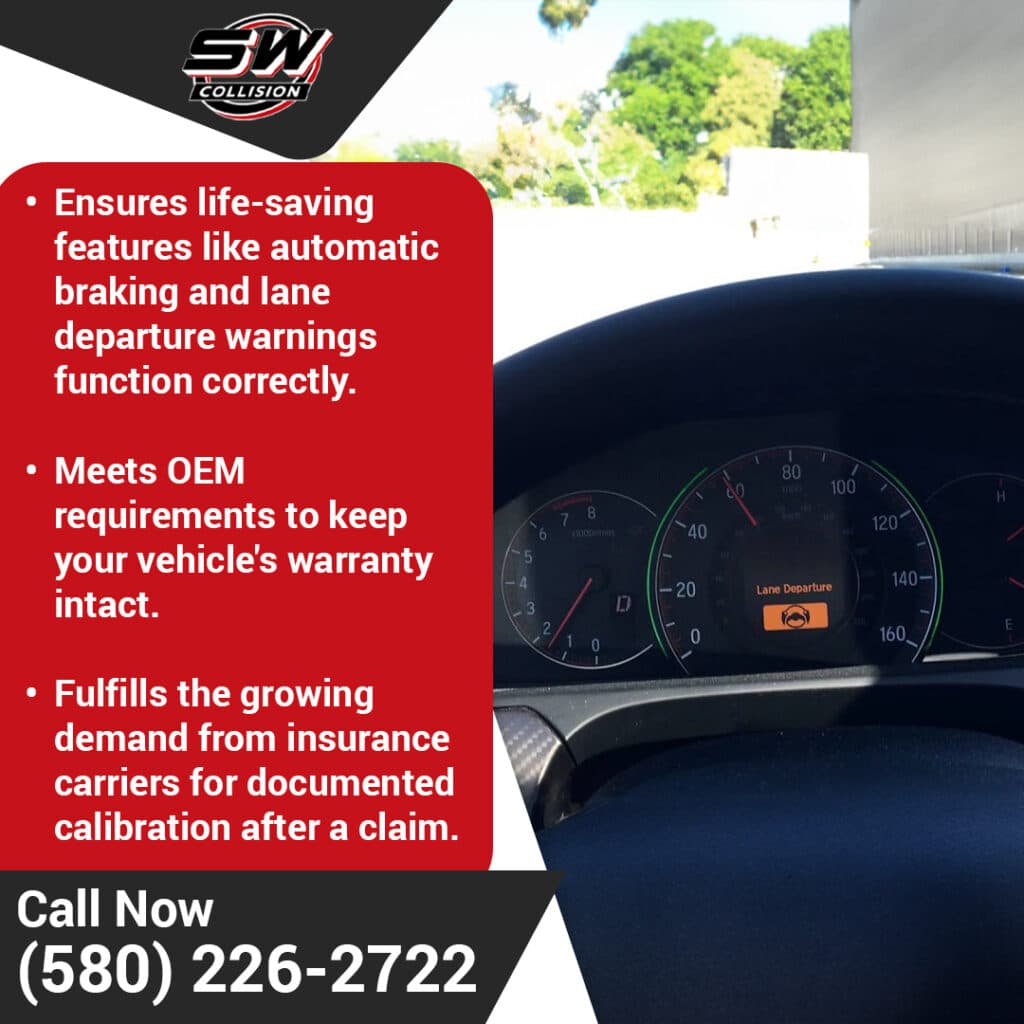
Your safety systems will not protect you properly if they are not correctly calibrated. A misaligned sensor may fail to detect an obstacle in time, and lane departure warnings could activate even when you are driving straight. These errors create false alerts, delayed responses, and unsafe driving conditions that increase accident risk.
Insurance companies often require proper calibration after repairs. Without documented calibration, you may face claim denials if another accident occurs, and the liability can fall directly on you. This risk is why working with trained collision repair specialists matters. Proper procedures protect both safety and documentation.
Your vehicle’s warranty may also be affected. Manufacturers require certified calibration for warranty coverage on safety systems. Skipping this step can void coverage on ADAS components, leaving you exposed to legal and financial risks.
The Cost of Safety
ADAS calibration adds to repair costs, but it’s not optional. The technology protects lives. We provide transparent pricing and explain what your vehicle needs.
Many insurance policies cover ADAS calibration as part of auto collision repair. We work directly with insurance companies to handle claims properly.
Calibration is part of restoring the vehicle to manufacturer specifications after repairs. You wouldn’t skip fixing the brakes. ADAS deserves the same attention.
How Long Does ADAS Calibration Take?
Most calibrations take 1-2 hours per system. Complex vehicles with multiple ADAS features may need longer. We schedule calibration as part of your overall repair timeline.
Some calibrations require specific weather conditions. We can’t calibrate certain systems in heavy rain or extreme temperatures. This protects the accuracy of the work.
Dynamic calibrations need clear roads and good weather. We can coordinate with you to complete these properly. Your safety is worth the extra time.
Questions to Ask Your Collision Repair Shop
Not all shops have ADAS calibration equipment. Before choosing a shop for collision repair in Ardmore, OK, ask these questions:
Do you have OEM-approved equipment? What training do your technicians have? Do you follow manufacturer procedures? Can you calibrate ADAS systems?
These questions help you find qualified professionals. At Southwest Collision, we answer yes to all of them. We invested in technology to serve you better.
Auto Collision Repair: Technology Keeps Advancing
New ADAS features appear in vehicles every year. Calibration requirements change with them. We maintain relationships with training providers and equipment manufacturers.
This keeps us ready for whatever vehicle comes through our doors. From basic parking sensors to advanced driving features, we handle it all.
Our commitment to training means you get the most current service. We don’t guess or skip steps. Your vehicle gets the attention it deserves.
Schedule Your ADAS Calibration Today
After any collision, have your ADAS checked by professionals. Call Southwest Collision at (580) 226-2722 to schedule an inspection. We are also available via email at sw.collision@yahoo.com.
We serve Ardmore and nearby areas in Oklahoma. Our team treats every vehicle like it’s our own. You’ll get quality workmanship backed by our warranty.
Your vehicle’s safety systems protect your family every day. Trust them to technicians who understand their importance. Visit us at 2416 N Commerce Street in Ardmore, or check our services online.
Don’t let improperly calibrated ADAS put you at risk. Contact our team today for professional auto body repair in Ardmore, OK, with proper ADAS calibration included.